
From Sunlight to the Grid: How Solar Plants Work

Introduction
Finding out “How does a solar power plant work?” or “How does solar energy work step by step?” Every solar plant, from a 5 kW rooftop system to a 100 MW utility-scale farm, performs the same basic function: converting sunlight into electricity through the photovoltaic effect.
What has changed in the last decade is not the underlying physics; it’s everything that happens around it. Today’s plants are digital operations, not just rows of panels in the field.
This guide breaks down the entire solar power generation process, from sunlight hitting the panels to the electricity reaching the grid, and explains why modern plants operate so differently from installations from ten years ago.
How Do Solar Power Plants Work? Step-by-Step Process
Step 1: Sunlight Hits the Solar Panel
- Solar panels (modules) are made from photovoltaic (PV) cells, usually monocrystalline or polycrystalline silicon.
- Sunlight photons hit the cells and cause electrons to be released. This is called the photovoltaic effect.
- This produces DC (direct current) electricity, which is not yet usable by homes, businesses, or the grid.
Step 2: DC Power Reaches the Inverter
- The panels and strings are connected to a solar inverter, which converts DC to AC (alternating current).
- Common inverter types include string inverters, where one inverter serves a group of panels, and microinverters, where each panel has its own inverter.
- Modern inverters also perform MPPT (Maximum Power Point Tracking) to extract the maximum possible power from the panels at every moment.
- Inverters continuously monitor voltage, current, and temperature.
- They can detect and report faults at the string or inverter level.
- Operational data is sent to the monitoring platform.
Step 3: Power Flows Through Transformers and Switchgear
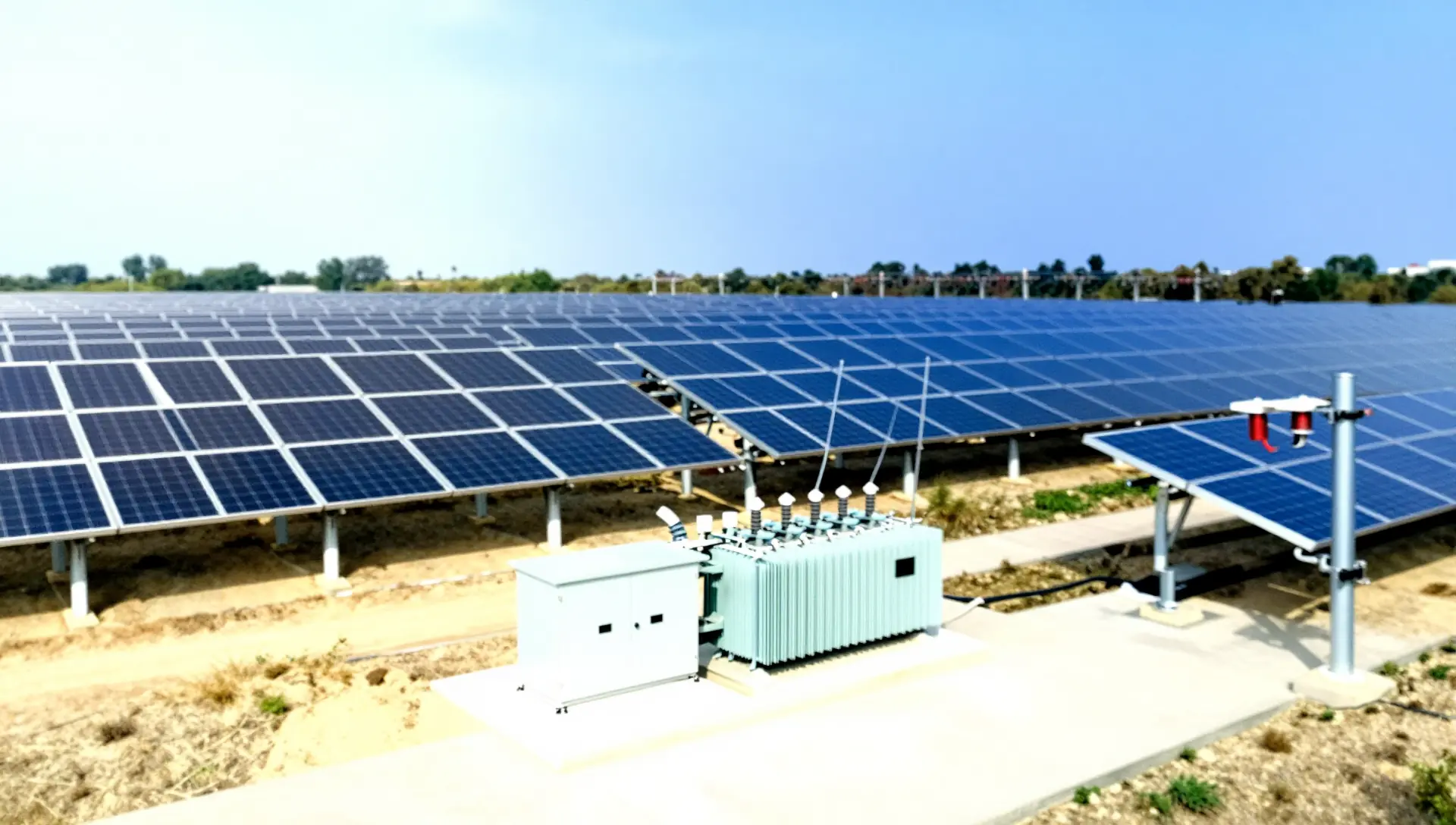
- AC power voltage is increased by transformers for more efficient transmission.
- Plants generating more than 500 kW typically use step-up transformers.
- Switchgear provides safety isolation and can automatically disconnect faulty sections of the electrical system.
Step 4: Metering and Grid Connection
- Metering equipment records energy exports and imports, where applicable under net metering.
- This data is important for commercial settlement and payment calculations.
- It supports regulatory compliance, including grid codes, net metering, and zero-export requirements.
- It also enables performance verification by comparing actual production against expected output.
- Electricity then flows from the grid interconnection point into the wider electricity network.
Step 5: Weather Data Runs in Parallel
- A Weather Monitoring Station (WMS) continuously captures irradiance, ambient temperature, module temperature, wind speed, and humidity.
- This data establishes the expected production baseline for any given moment.
- Without weather data, lower production caused by cloudy conditions can look similar to production losses caused by equipment failures.
Why Modern Solar Plants Work Differently From Older Ones
Manual Monitoring to Automated Monitoring
Each inverter, meter, and sensor can continuously push operational data through IoT gateways using technologies such as Modbus, RS485, and MQTT, reducing the need for physical site visits.
Single-Site Monitoring to Portfolio-Wide Visibility
A centralized RMS/CMS platform allows EPCs and asset owners to monitor dozens of sites from a single dashboard, giving teams a unified view of plant performance.
Reactive Performance Management to Predictive Performance
AI-based analytics can identify abnormal behavior and flag string-level underperformance within minutes instead of waiting for a visible drop in overall generation.
Isolated Generation to Grid-Interactive Assets
Net metering, zero-export requirements, and battery storage integration mean modern solar plants can actively respond to changing grid conditions rather than simply generating electricity in isolation.
Why This Matters to Plant Owners and EPCs
Identical Equipment Can Produce Different Results
Two plants with identical equipment can show meaningfully different annual yields depending on how efficiently they are operated and maintained.
Faster Fault Detection Protects Generation
The difference is often how quickly faults are detected, identified, and resolved. A small issue that goes unnoticed for days can become a significant generation loss.
Monitoring Turns Production Into Revenue
Theoretical production only becomes revenue when monitoring and operations teams can identify and close performance gaps quickly.
Conclusion
Understanding the journey from sunlight to grid—and where data flows alongside the power—is the foundation for everything else in solar operations.
SCADA systems, performance metrics, predictive maintenance, and grid compliance all rely directly on this architecture.
A quick gut check for your own plant: Do you know within minutes when a string is underperforming on a partly cloudy afternoon, or when a monthly production report comes in lower than expected?
That gap is exactly what modern monitoring infrastructure is designed to close.
Frequently Asked Questions
Ready to
Make Your Solar Plant Smarter?
Get a free demo of Intellisolar’s Edge-Enabled IoT SCADA System and experience next-generation solar monitoring.