
PM-KUSUM Scheme 2026: The Complete Guide to India’s Solar Revolution for Farmers

What Is the PM-KUSUM Scheme?
PM-KUSUM was launched by the Ministry of New and Renewable Energy (MNRE) on March 8, 2019, and scaled up nationally from 2020–21 onward. The scheme’s full form is Pradhan Mantri Kisan Urja Suraksha evam Utthaan Mahabhiyan, which roughly translates to “Prime Minister’s Farmer Energy Security and Upliftment Campaign”.
The core idea is simple: instead of farmers depending on costly diesel gensets or an overburdened electricity grid to run irrigation pumps, PM-KUSUM helps them install solar panels either to power their own pumps directly or to generate extra electricity they can sell back to the grid for additional income.
The scheme sits at the intersection of three national priorities:
- Energy security for farmers - daytime, reliable power for irrigation.
- Reduced subsidy burden on DISCOMs - less free or subsidized grid power consumed for agriculture.
- India’s renewable energy targets - contributing towards the country’s non-fossil-fuel capacity goals.
As of 2026, the overall target remains 34,800 MW of solar capacity addition, backed by Central Financial Assistance of approximately ₹34,422 crore, according to official MNRE scheme documentation.
PM-KUSUM Components Explained: A, B & C
PM-KUSUM is structured into three distinct components, each targeting a different point in the farm power ecosystem.
Component A - Decentralized Grid-Connected Solar Power Plants
Farmers, cooperatives, panchayats, Farmer Producer Organizations (FPOs), or Water User Associations can set up small solar power plants, typically 500 kW to 2 MW, on their own land - barren, uncultivable, or partially cultivable - and sell the generated power to the local DISCOM under a Power Purchase Agreement (PPA).
The target under this component is 10,000 MW.
If a landowner cannot arrange the required capital, they can lease land to a developer or DISCOM and earn lease rent instead.
Component B - Standalone Solar Agricultural Pumps
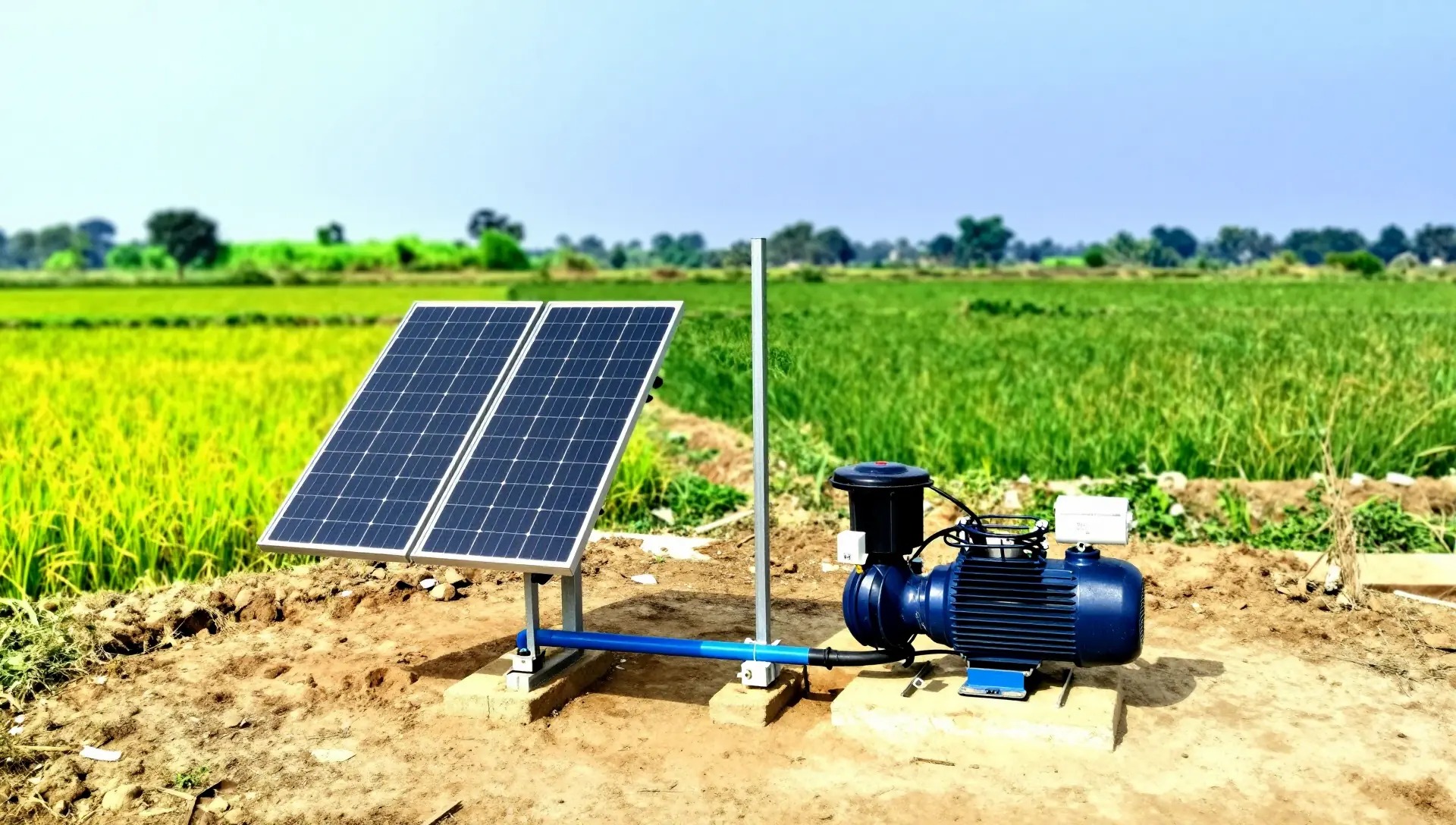
This component replaces diesel pumps with standalone solar-powered pumps of up to 7.5 HP, particularly useful in areas without grid connectivity.
The target is 14 lakh (1.4 million) standalone solar pumps.
These pumps run independently of the grid, giving farmers reliable daytime irrigation power without recurring diesel costs.
Component C - Solarization of Existing Grid-Connected Agricultural Pumps
Farmers who already have a grid-connected pump can add solar panels, with solar capacity generally allowed up to twice the pump’s capacity in kW, to power it.
Surplus electricity generated beyond irrigation needs can be sold to the DISCOM, creating a new income stream.
The target here is 35 lakh (3.5 million) pumps, including large-scale Feeder Level Solarization (FLS) projects that solarize an entire agricultural feeder rather than pump-by-pump.
PM-KUSUM Components at a Glance
ComponentFocusTargetTypical BeneficiaryComponent AGrid-connected solar power plants (500 kW–2 MW)10,000 MWFarmers, FPOs, cooperatives, panchayatsComponent BStandalone solar pumps (off-grid)14 lakh pumpsIndividual farmers without grid accessComponent CSolarization of existing grid pumps + feeder-level solarization35 lakh pumpsFarmers with existing grid-connected pumps
The scheme also permits inter-transfer of quantities between Component B and Component C, giving states flexibility to reallocate targets based on regional demand.
Whichever component your project falls under, Intellisolar’s monitoring platform is built to support all three - from single standalone pumps to multi-megawatt Component A plants.
Subsidy Structure: Who Pays What?
PM-KUSUM uses a shared cost-financing model.
Central Financial Assistance (CFA)
The Central Government provides 30% of the benchmark cost or tender cost, whichever is lower.
State Subsidy
The state subsidy is at least 30%, although the exact amount can vary by state.
Farmer Contribution
The farmer contributes the remaining amount.
Up to 30% of the farmer’s share can be financed through a bank loan, meaning the farmer often pays only around 10% upfront, depending on the financing structure.
Special Category States
For North-Eastern states, Sikkim, Jammu & Kashmir, Himachal Pradesh, Uttarakhand, Lakshadweep, and Andaman & Nicobar Islands, CFA rises to 50% of the benchmark or tender cost.
Typical Solar Pump Costs
For context on real-world costs before subsidies, a 3 HP solar pump has typically ranged around ₹1.2–1.5 lakh, while a 10 HP pump can cost approximately ₹5–6 lakh.
Typical loan repayment tenures can extend up to 10 years.
Eligibility Criteria for Farmers
While exact documentation requirements vary slightly by state implementing agency, the broad eligibility framework across components includes:
Individual Farmers
Individual farmers with cultivable land are generally eligible for Components B and C.
Farmer Groups and Organizations
Groups of farmers, cooperatives, panchayats, FPOs, and Water User Associations are primarily eligible for Component A.
Land Ownership or Lease
Farmers must have valid land ownership or lease documents as applicable to the project.
Existing Grid Connection
For Component C, the farmer must already have a functional grid-connected agricultural pump with a valid electricity connection.
Land Requirements for Component A
Land for Component A should generally be barren, uncultivable, or underutilized.
KYC and Banking Requirements
KYC documents, bank account details linked for direct benefit transfer, and Aadhaar are typically required during application.
Because implementation is state-specific, farmers should confirm exact eligibility and documentation with their State Implementing Agency (SIA) or state renewable energy development agency.
How to Apply for PM-KUSUM Online
Visit the National PM-KUSUM Portal
Visit the National Portal for PM-KUSUM at pmkusum.mnre.gov.in.
Select Your State and Component
Select your state and the relevant PM-KUSUM component - A, B, or C.
Register and Submit Documents
Register using the required Aadhaar, land documents, bank details, and other state-specific documentation.
Choose an Empaneled Vendor
For applicable Component B and C pumps, choose a vendor from the state’s approved or empaneled vendor list.
Pay the Farmer Contribution
Pay the applicable farmer contribution after accounting for the available subsidy and financing structure.
Track Application and Installation Status
Track your application and installation status through the portal or relevant state agency.
PM-KUSUM Helpline
For queries, MNRE’s toll-free helpline is 1800-180-3333.
Applications and vendor empanelment processes differ by state, so it is worth cross-checking with your state nodal agency’s dedicated PM-KUSUM webpage before applying.
PM-KUSUM 2026 Update: Deadline Extension & PM-KUSUM 2.0
Several important developments have shaped PM-KUSUM in 2026.
Deadline Extension
The scheme was originally slated to conclude by March 31, 2026.
Following representations from states and developers about financing delays, MNRE issued a March 28, 2026 memorandum extending completion timelines.
For Component A and Component C Feeder Level Solarization, financial closure was extended to September 30, 2026.
For eligible projects where PPAs or Notices to Proceed were issued on or before December 31, 2025, the overall completion deadline was extended to March 31, 2027.
For Component B and individual pump solarization under Component C, the commissioning deadline was set at September 30, 2026.
MNRE has indicated that further extensions will only be considered on a case-by-case basis.
PM-KUSUM 2.0 in the Pipeline
As of mid-2026, MNRE has not yet formally notified PM-KUSUM 2.0.
However, strong signals point toward its potential arrival. The Union Budget 2026–27, presented on February 1, 2026, raised the annual KUSUM allocation significantly, and government officials, including the Union Minister for New and Renewable Energy, have referenced a total scheme outlay in the range of ₹50,000 crore.
Discussions around the next phase have also included a proposed 10 GW agrivoltaics component and integration of Battery Energy Storage Systems (BESS) to store daytime solar power for evening use.
Rising State Activity
States such as Rajasthan, Bihar, Maharashtra, and Madhya Pradesh have accelerated reviews and rollout in 2026, with some states adding top-up subsidies on top of central assistance.
Because these details are evolving, always verify current deadlines and PM-KUSUM 2.0 guidelines on the official MNRE PM-KUSUM page before making financial commitments.
Why PM-KUSUM Is a Game-Changer for Farmers
Reduced Electricity and Diesel Expenses
Solar pumps can eliminate recurring diesel costs and reduce dependence on grid electricity.
Additional Income Opportunities
Surplus power sold to DISCOMs can turn farmland into a small power-generation asset and create an additional income stream.
Sustainable Farming
Solar-powered irrigation reduces dependence on fossil fuels and supports cleaner agricultural operations.
When paired with efficient irrigation practices, monitoring can also provide greater visibility into water usage.
Support for India's Renewable Energy Targets
Decentralized solar capacity contributes directly towards India's broader non-fossil-fuel energy goals.
Improved Energy Reliability
Daytime solar generation can reduce dependence on an often-overstretched agricultural feeder grid and improve access to irrigation power.
Real Implementation Challenges on the Ground
Despite strong policy intent, PM-KUSUM projects on the ground can routinely encounter operational challenges.
Pump and Inverter Failures
Equipment operating in dusty, high-temperature rural environments can experience frequent failures and performance degradation.
Data Reporting Delays
Large numbers of geographically distributed installations can make timely data collection and reporting difficult without automated monitoring.
Network Connectivity Problems
Remote agricultural areas can experience unreliable network connectivity, disrupting real-time data transmission.
Water Discharge Monitoring
Monitoring water discharge under applicable Component B and C projects can be important for verifying actual usage and supporting responsible groundwater management.
Compliance and Subsidy Risk
Incomplete reporting, missing data, or failure to meet applicable performance requirements can create risks during compliance checks and subsidy-related processes.
These are not minor inconveniences. For developers and State Implementing Agencies, unresolved compliance gaps can delay processes associated with CFA disbursement or trigger penalties.
For farmers, equipment downtime directly reduces the irrigation and income benefits the scheme promises.
This is precisely the gap Intellisolar was built to help close.
Why Remote Monitoring Systems Are Now Essential
The success of PM-KUSUM increasingly depends on technology as well as policy.
A robust Remote Monitoring System (RMS) bridges the gap between installed hardware in remote fields and the organizations responsible for monitoring project performance, including MNRE, state agencies, DISCOMs, EPCs, and developers.
Real-Time Tracking
Monitor generation, consumption, equipment health, and operating conditions across distributed installations.
Automatic Reporting
Automate scheduled reporting and data synchronization, reducing manual data-entry delays and errors.
Instant Fault and Downtime Alerts
Identify pump, inverter, communication, and other equipment failures quickly so field teams can respond before minor issues become prolonged downtime.
Performance Ratio Tracking
Track Performance Ratio (PR) to identify underperforming installations and flag efficiency issues early.
Audit-Ready Compliance Records
Maintain structured performance and compliance records to support verification and reduce the risk of reporting disputes.
In short, monitoring converts PM-KUSUM from a one-time installation subsidy into a continuously verifiable, high-performing energy asset.
Key Features to Look for in a PM-KUSUM Monitoring System
If you are a developer, EPC, or SIA evaluating monitoring solutions for PM-KUSUM projects, prioritize systems with the following capabilities.
Edge Computing for Offline Data Recording
Connectivity outages are common in rural India. Edge computing allows monitoring devices to store readings locally and synchronize the data automatically once connectivity is restored.
Water Flow Monitoring for Solar Pumps
Water flow sensors provide visibility into pump operation and discharge, making them important for monitoring applicable Component B and C projects.
Weather Sensor Integration
Irradiance, temperature, wind, and other weather data can help distinguish genuine equipment faults from weather-driven performance variations.
Automatic MNRE Portal Data Submission
Direct or API-based reporting can reduce manual errors, reporting delays, and repetitive data-entry work.
Rugged Hardware for Rural Conditions
PM-KUSUM monitoring equipment must operate in environments involving dust, heat, humidity, voltage fluctuations, and difficult site access.
Industrial-grade enclosures and components are therefore essential.
Solutions built around these five pillars directly address many of the common PM-KUSUM failure points - pump and inverter downtime, reporting delays, connectivity gaps, discharge monitoring, and compliance risk.
How Intellisolar Solves PM-KUSUM's Compliance & Uptime Challenges
Intellisolar builds remote monitoring systems designed around the operating conditions and compliance requirements of PM-KUSUM projects.
Frequent Pump and Inverter Failures
Intellisolar solution: Continuous health monitoring with instant fault alerts, allowing field teams to identify and respond to failures quickly.
Data Reporting Delays
Intellisolar solution: Automated and scheduled data synchronization with state and MNRE portals, reducing dependence on manual entry.
Rural Network Connectivity Gaps
Intellisolar solution: Built-in edge computing stores readings locally and synchronizes them automatically once connectivity returns.
Water Discharge Tracking
Intellisolar solution: Integrated water-flow sensors provide auditable, real-time discharge records.
Subsidy Rejection Risk
Intellisolar solution: Audit-ready compliance logs and Performance Ratio tracking help reduce reporting gaps and support verification.
Harsh Rural Conditions
Intellisolar solution: Industrial-grade, rugged hardware designed for dust, heat, humidity, and voltage fluctuations.
For EPCs, SIAs, DISCOMs, and individual farmer groups managing PM-KUSUM Component A, B, or C assets, Intellisolar's RMS is designed to plug directly into existing project workflows - turning scattered field installations into a single, real-time, compliance-ready monitoring environment.
Frequently Asked Questions
Final Takeaway
PM-KUSUM has already reshaped how millions of Indian farmers approach irrigation power and rural energy.
As the scheme moves toward its 34,800 MW target and potentially evolves into a new phase, the difference between a subsidy that is simply disbursed and one that delivers lasting value increasingly comes down to monitoring, data, and compliance infrastructure.
Farmers, EPCs, developers, and state agencies that invest in reliable, rugged, real-time monitoring systems can gain better visibility into project performance while protecting uptime, operational efficiency, and long-term project value.
Ready to
Make Your PM-KUSUM Project Fully Compliant and Downtime-Proof?
Talk to the Intellisolar team about deploying a monitoring solution built for Component A, B, and C projects.